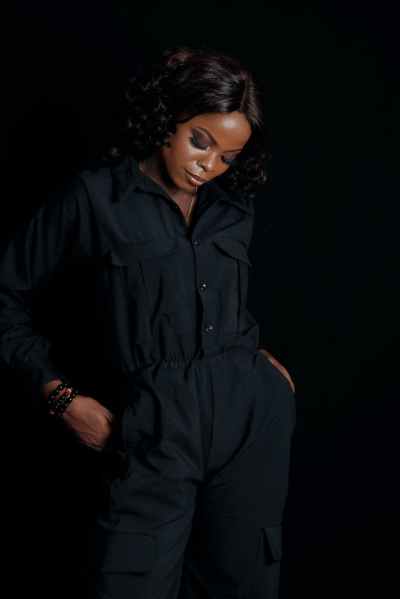
Just Be

What would it be like to “just be”?

As in, live “as is”, no changes, as today’s version – the exact same you that exists this second. What would it be like to be completely yourself without striving and straining toward some goal, some other version of you? Imagine it for just a moment. What’s there? What isn’t?

Is it enjoying a social situation freely without the pressure to make a friend, make a deal, be seen, or even unseen?

Is it exhaling and releasing your belly or the folds of your back to unravel, without a care, across the area below?

Is it placing a block on the past – a transparent wall that separates you from a joy, mistake, or trauma where your brain thinks you should live instead?

What would it be like to just be and embrace what is, whatever it is, right now?

Radical (self) acceptance. Would it be so bad?

Imagine that. A moment where everything that’s happened, everything you’ve witnessed, and where you are now has been totally and completely accepted… by the most important person, you. No bones to eat clean. No details to pick apart. Just be-ing.

I’m realizing that there’s so much more to see when I am present here and ok with what is. When I’m not obsessing over what I could’ve said vs what I did say or whether that thing will work out the way I hope or worrying about what new thing aging has assigned to me, there’s calm, silence, rest, and sometimes, if I’m honest, sleep.

Lately, this is where Jesus has been leading me. To “just be” is a whole new world for me… one who is either waist-deep in the past, picking apart the present, or running light-years into the future. To “just be” is radical.

So far, I like that worry doesn’t seem to live here. But I can’t say for certain what does. I’ve only just started to look around.

What about you? What do you see?

Beautifully Human

Here at the start of the year, I found myself teetering on the edge of a (yet another) depressive episode. In the last few days of 2023, I found joy in a quiet Christmas, a beautifully reimagined The Color Purple, and a simple NYE. But as the new year began, heavy rain and the threat of snow did whatever it does to my brain that shuts life down.

It set off the migraines, drowsiness, and fatigue that keeps me stuck in a dark room, huddled under the covers, barely coming out to eat or even bathe – much like a depressive episode. And with the addition of some unwelcome medical news and the ending of some important relationships, my personal cache of hope began to slip through my fingers.

This odyssey with my health followed me into the new year, along with a very real and recent job loss. Last year, my deeply analytical brain couldn’t muster the cognitive strength to do my job. I couldn’t even fake it. As 2024 approached, I tried not to think too much about how I would manage, much less overcome all of this, until I was firmly in the new year.

At this point, I am convinced that God has gotten me every job that I’ve ever had. In each scenario, there were too few options and resources to see it any differently. And through prayer, I had been reassured that the God that did that for me so many times before would do it again when the time came. So, again, I tried not to dwell on it… until the new year.

But when 2024 came, I felt overwhelmed that I didn’t have a single idea of how I would navigate any of this. To be honest, I’m still crawling my way out of those feelings. And you know what else? It’s frustrating as hell.

It’s frustrating to believe in a very real and personal God, yet still struggle with doubt and fear that makes me want to control everything. I used to believe that all I needed was to be reassured that God had it, had me, and all my worries would melt away. But more and more, I’m seeing that faith doesn’t exactly work that way all the time, or at least not mine.

I’m seeing that faith still takes work, no matter what reassuring words the Holy Spirit whispers into my heart in the quiet hours of the night. I’m learning that I may still have to hold on to the word even when I can’t see it happening for me, even when there’s no evidence that it ever will.

Sometimes, building this muscle of faith sucks. But I’m also seeing that it’s okay to acknowledge that it does sometimes suck.

So often, I want to push myself to shake it off or beat myself up when I find myself dwelling on the hard and uncertain stuff. I get angry. I get sad. I become unforgiving of self. But emotions are just signals to be investigated, right? And, make no mistake, they are God-given.

If I’m made in the image of God, in mind, body and spirit, and the God of the Bible gets angry, is grieved, or has any other emotion, then so can I. I have yet to see Jesus, the Father, or Holy Spirit try to repress how they feel in the Bible.

There’s no mention of Jesus beating himself up for being frustrated with the disciples’ lack of faith or after running the money changers out of the temple. I’ve never heard of Daddy God pretending not to regret that he had made people during all the antics of Noah’s time on earth. Nor have I known the Holy Spirit to pretend not to be grieved when I’ve gone my own way or made a mess of a gift I’ve been given.

They feel their feelings… they just don’t stay there. And made in their image, I can allow myself to do the same.

I can love God and still be frustrated that building and exercising faith can be hard, frustrating, and not at all fun. It’s okay, I can feel those feelings even as I keep walking forward with God. After all, it’s how I’m made.

Faithing It

A few days ago, a friend sent me a meme that read:

“Does anyone else wish that Jesus would walk into your kitchen,  sit down with a cup of coffee, look at you and say, “OK, here is what we’re gonna do.”

My response? A GIF of Janet Jackson eating orange slices and saying, “It’s true though”. Because, really, who can’t relate to that feeling?

In a real way, the Bible gives us keys to living with wisdom and how to stay in step with God. But it doesn’t exactly provide a solution to every specific issue or challenge that we face. Thankfully, we have the Holy Spirit to help with that. 

But what the Bible is real clear about is the necessity of faith. Faith is the confident expectation of good. It’s believing that God keeps God’s promises. It’s based on trust, and both are like muscles. They need to be worked and stretched constantly in-order to be strong.

But pause… Who wouldn’t want God to break it all down?

Who would pass on God laying out the details of our future and how to move each step of the way IN ADVANCE? Not me. And, most likely, not you either.

Right now, I’m in a situation that worries me. This brain injury and everything that has come with it has me reevaluating what my future could look like, especially when it comes to how I will support myself. And it’s becoming clear that my current employment situation is no longer a good fit for a variety of reasons.

I’m holding on to my hope that it will all work out well for me. But, I’m not sure how any of the challenges along the way will shake out or exactly how to move.

If I’m being honest, it’s been scary, and a lot of the time, I feel pretty alone, though I know better. So, a one-on-one strategy meeting with an in-person Jesus would be welcome. But I know that’s not likely to happen.

In all honesty, I wish I didn’t need faith. Sometimes it feels like trusting God takes too much effort.

But then I remember my past experiences and the faith that I needed to get through them. I’ve dealt with things that were scary at the time that wouldn’t even make me break a sweat now.  And that realization reminds me that the strength that I have now is a direct result of the faith and trust I had to cultivate during those times.

Would I have the faith muscle that I have today, if I ever had that kitchen table strategy meeting with Jesus? Probably not.

I can now see that, without the scary, faith building experiences of my past, I wouldn’t be able to carry the weight of my current situation at all.

Or, more accurately, trust that God is helping me carry it and is guiding me through to the other side of this problem one step at a time.

A hard lesson

Have you ever had to learn a lesson the hard way?

Maybe, as a child, you couldn’t contain your fascination at the flames dancing atop the stove, that is, until you got burned. I bet those flames lost their appeal real fast.

At the start, the thing, whatever it is, doesn’t seem dangerous, maybe even manageable. But eventually, we learn that what we see could only be the tip of the iceberg, and it usually is. There’s often a whole mountain beneath the surface. Unfortunately, the experience that comes with this discovery usually involves some broken bones, aka consequences.

In my journey with Jesus, I have sensed a guiding force that kind of taps me on the shoulder when I get too near dangerous terrain. It often signals me to “wait” or directs me to change course. Sometimes, it’s a gut instinct, other times it’s a still small voice that I don’t really hear with my ears, but sense somewhere within me. For years, I didn’t pay attention to either.

I thought I was wise enough to thoroughly assess every situation and make my own decisions. Most of the time, I thought those nudges were my fears trying to keep me from living. Just as often, I discovered that I couldn’t have been more wrong.

By ignoring my gut and what I now recognize as the Holy Spirit’s leading, I was headed straight into a disaster, something that could ruin my life.


Case in point, the day of this car accident, I knew that I needed to stay home. I had felt the nudge to get more rest. I had worked until the wee hours of the morning. But I still felt pressure to make it in, albeit around mid-day. I was extremely tired, too tired to be driving, especially in snowy and icy conditions. But I did it anyway.

In the end, I totaled my car and got a concussion. Thankfully, I was the only person impacted, and my insurance covered everything. God absolutely took care of me. Medical bills were covered, rental car paid for and eventually, even got a new (to me) car paid for in (mostly) cash. I was struggling through some intense migraines but was told it was temporary. I had reason to hope. I was enduring the consequences of my own stupid actions while witnessing God’s faithfulness all at the same time.

Now, almost 5 years later, I’m still struggling with debilitating migraines, and some serious cognitive issues that I wasn’t even aware of until a few months ago, but now seem plain as day when I look back over the years. It’s been tough… I can’t lie. Some days, I feel like I’m drowning.

I have often blamed myself. I mean, it is entirely my fault. But blaming doesn’t fix it. I beat myself up, too, but that doesn’t help either. I hold all my questions and complaints from God until I collapse, unable to stand up under it all. I think, “Why would God want to hear any of that anyway?” Though, I’m sure God already knows.

I can’t begin to know why God allowed things to go this way. And I have no idea what I might gain by this prolonged suffering from a God that makes all things work together for my good. But I have noticed something worth mentioning.

He hasn’t left.

That guiding presence, the admonition to wait, that still small voice hasn’t evaporated from my days. It’s still leading – sometimes to bed early, away from overexertion, to time with him – in his Word, to the right doctors and specialists. I didn’t expect it, but I’m learning a hard lesson about God’s faithfulness. I’m learning that it’s constant, even in the face of my own failure.

Trust is letting go Pt. II

I’m letting go.

It’s a cloudy winter afternoon and I’m running late. Snow is falling lightly and turning to slush on the roads. If left undisturbed for a minute or more, it turns to ice in the bitter cold. Mindful of the time, I keep pace with the cars gliding down the highway. But when I hit my exit, I realize that time shouldn’t have been my only concern. Because suddenly, I’m slipping and sliding.

My tires have hit a patch of black ice and I’m in chaos. Forgetting what I know, I hit the brakes. Wrong move. I’m beginning to spin even as my car skids forward. I turn the wheel hard to the right and then I see it – the short concrete sidewall of the ramp, less than 10 ft ahead and even more above ground. And I’m moving fast toward it. Overwhelmed and out of control, I take my hands off the wheel and close my eyes, bracing for impact.

This haunting memory is what came to mind a few weeks ago, when I spoke to my play big sister. We got caught up on what’s been happening in each other’s lives and there was much to tell. But in recent years, I’ve noticed a growing calm in my good friend’s demeanor and perspective on the events of her life. My normally boisterous and giggly friend, though still joyful, had become more subdued. The twists and turns of living don’t seem to warrant the same complicated reactions as before. Instead, everything had become very simple. I guess, having a serious illness has a way of doing that to you.

We talked about her restorative trip to the Outer Banks in North Carolina, the calming effect of being near water and her new perspective on stress. Like the water that she watched drift in and out from the shore, she had decided to just flow. Though her body is doing things that she does not want or understand, she was accepting that she was not in control – not of her illness or her life. All she could do is her part – take her medicine, avoid stressful interactions and situations, and treat her mind and body well – because the outcome wasn’t up to her. That part was up to God. My friend was letting go, not of life, but of the illusion of control.

That cold, snowy day on black ice, I made a split decision to release control and trust God for an outcome that I would be able to recover from. I let go. And in that moment right before impact, I wasn’t panicked. I was free.  

When I think about the choice to leave my toxic work environment, it almost doesn’t even feel like a choice. I feel pushed by the toxicity to go elsewhere. But I’ve vacillated between wanting to leave and wanting to be valued. And the truth is that I don’t have any control over that last part.

How people perceive me and my work or what they are willing to do in the face of racism in the workplace isn’t up to me. That responsibility is entirely their own. All I can do is make choices that value and affirm my own well-being. The choice that does that best is the one where I leave. There’s nothing left for me here and I know it.

I don’t know what my future would look like if I accept the job offer that has been the subject of my many pro and con lists. I’m not sure what to expect of this new position in a different field in a new state. A new environment, new people, and new expectations and demands means unpredictable. And in all honesty, I can’t be sure that the “new” place would be any better than the last one.

It’s a choice that challenges me to consider how I view myself and my potential as a professional. But more than that, it requires me to decide whether my faith is real or “sometimey.”

It forces me to ask myself, “do I really believe that I walk through life holding God’s hand?” And if the answer is yes, “then prove it … let go. Leave.”

In her book, In My Grandmother’s House, Yolanda Pierce captures the gravity of this moment well. She says, “Leaving is trusting in God. Leaving is a leap of faith with no guarantee that the situation you encounter once you have left will be any more life-giving. Leaving is walking out of Egypt without the certainty that you will ever arrive in Canaan. … The lesson of leaving is not in the destination, which you may never reach, but in the journey itself.”

Leaving is a gamble. But letting go is trusting, not in myself, but in my God.

I can’t control the outcome, but I can make the choice.

I choose to trust God and journey onward to see what the end will be.

What about you? What are you choosing to let go of?

©2022 Creatorskind